Is micro-messaging service an evolved form of communication or an overhyped fad?
By NATHAN HALVERSON
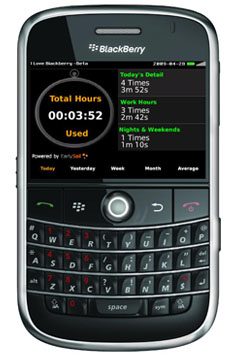
Seth Ponek, region process improvement manager at Hertz rental in Rohnert Park, has an iPhone for personal use and a Blackberry for business use and Twitters to share what he finds interesting and to learn what others are finding interesting too.
Seth Ponek is an elite Twitter user -- at least locally.
The Sebastopol resident has more than 800 followers on the free micro-messaging service, and that number is growing as Twitter.com becomes the hottest site online.
More Twitter users follow Ponek than subscribe to the Twitter accounts of the Sonoma County Tourism Bureau, the chief executive of Sonic.net, or any reporter at The Press Democrat.
But what does that mean? Why would almost 800 people be interested in the online musings of a manager at Hertz Rental Equipment in Rohnert Park?
"At the eye doc. Still 20/20," Ponek recently tweeted. And a few days later, "Light traffic in and out of Union City, ca...Everyone must be out with the flu...Hope not."
Ever since Twitter entered the global spotlight this year -- anointed by none other than Oprah last month -- online pundits have questioned the significance of Twitter and what it means to have lots of followers.
At the heart of the matter is whether Twitter is a passing fad or the harbinger of an evolved form of communication that forces people to express themselves succinctly, in 140 characters or less.
Only time will answer that question. But already interesting trends have emerged showing how people are using it -- and why it might be over-hyped.
Twitter: One-hit wonder?
One ongoing problem with Twitter is that people still use it like the site originally intended, posting answers to the question that greets you every time you log onto the site: What are you doing?
Frankly, most people don't care about the minutiae of other people's lives, and they don't want to know what a stranger ate for lunch or when they walked their dog.
The more appropriate question these days is: "What is a link to an interesting Web site, news story or online video, and how would you describe it in 140 characters or less?"
Twitter's explosive popularity has created a rift as people take opposing sides in the debate over its usefulness.
Fans of micro-messaging say it's a revolutionary tool that forces brevity, making people get straight to the point.
Detractors say that even if messages are brief, most are inane, and Twitter will become the next Pet Rock -- media hype today, lampooned tomorrow.
Maureen Dowd championed the haters in her New York Times column last month, writing "I would rather be tied up to stakes in the Kalahari Desert, have honey poured over me and red ants eat out my eyes than open a Twitter account."
For better or worse, Ashton "@aplusk" Kutcher has become a de facto mouthpiece for Twitter. The B-movie actor was the first person to reach 1 million followers -- winning a much hyped race against CNN.
Kutcher told Oprah that having lots of followers means a single person can potentially have as much influence as mainstream media stars like Larry King, Katie Couric or Rush Limbaugh.
But the emerging evidence about Twitter, not surprisingly, is far more nuanced than Kutcher's take. And it's a lot less painful than Dowd implied.
Why is Twitter so popular?
Twitter is what you make of it, and people are using it in many different ways, said Tim O'Reilly, chief executive of O'Reilly Media in Sebastopol.
O'Reilly recently co-authored "The Twitter Book," which is a how-to guide full of best practices.
O'Reilly has more than 350,000 followers with whom he shares information he finds interesting. And he parses through the quick tidbits shared by the 500 Twitter accounts he follows.
His wife has fewer than 20 followers, and is following only a half-dozen people.
"We have very different uses for Twitter. Both work," he said.
The Centers for Disease Control, @CDCemergency, is using Twitter to issue information about the swine flu. Wineries are using it for promotion. News organizations are using it as another channel to deliver stories.
Computer maker Dell used a Twitter account to offer special promotions during the holidays. The account resulted in more than $1 million in sales.
Stories like the Dell example have marketers clamoring to get on Twitter. Last week, Murphy-Goode Winery in Healdsburg announced it planned to pay someone $60,000 to manage its Twitter account for six months and promote the winery in other social networking media.
Businesses need to follow their customers online and interact with them wherever they communicate, said David Horowitz, who teaches social media marketing at Sonoma State University. He's not surprised to see so many companies getting on Twitter.
"With the economy as it is, companies have to put their necks out there," he said.
But with the growth in popularity, comes growing problems.
"There will be more spam, more commercial messages and more self-promotion," O'Reilly said.
But with the bad, comes the good. Business owners are monitoring what people are saying about their products, and even reaching out to dissatisfied customers directly through Twitter.
Comcast, which runs the Twitter account @comcastcares, is famous for offering customer service on Twitter. If you don't believe it, just tweet a complaint about Comcast and see if you don't get a response.
The average person uses it differently than businesses. They often follow a few friends, family and people who tweet about things they find important or interesting.
"I liken it to a front porch. You get to chat with folks as they walk by," said Josh Hermsmeyer, who grows Russian River grapes and runs the wine site pinotblogger.com.
Emerging trends
Twitter is bursting at the seams. Its number of U.S. visitors doubled in March, growing to 9.3 million, according to Comscore. Keep in mind, those are pre-Oprah numbers.
Interestingly, people ages 12 to 24 are the least likely to use Twitter.
The biggest users of Twitter are people ages 45 to 54, and they love consuming information, according to Comscore. Twitter users are voracious news readers, visiting sites such as CNN and the New York Times at rates nearly three times higher than the average population.
One trend that is emerging might dismay Kutcher. It increasingly appears that having a huge number of followers doesn't live up to the hype Kutcher and others gave it.
No doubt, having lots of followers on Twitter denotes a certain status. It gives people a digital swagger.
But online observers are beginning to question just how much swagger it should imply.
First, many "followers" aren't actually following. Some people sign up for an account, subscribe to follow a few people, but then never return to use the free service. Others simply don't read the tweets of people they follow. And that trend seems to be increasing as more mainstream, less geeky, people join Twitter.
The technology news site TechCrunch.com analyzed how many times its followers clicked on links to stories included in its Twitter messages. It found that the initial 65,000 followers of its Twitter account would click on links an average of about 2 times per month, resulting in 120,000 page views coming from Twitter.
But after TechCrunch increased its number of followers by nearly 300 percent, it estimated the total number of clicks coming from Twitter increased only 15 percent. In other words, for every 7.5 users it added on Twitter, it only gained one more page view per month at TechCrunch.com.
It's unclear exactly how many of Kutcher's 1.5 million followers read his minuscule musings such as: "yo! I want a glow in the dark dog!!!" and "it's sad that ppl don't C pirating movies off the net as stealing. its eventually going 2 reduce the quality of films."
But it is clear that people only actively read a small fraction of the tweets by the star of "Dude, Where's My Car?"
Kutcher recently linked to a video of Ted Turner, which has now been viewed about 15,000 times according to YouTube. That means less than 1 in 100 people clicked on the link. A picture of Kutcher's dog that he posted online using Twitter got 38,000 views -- a lot less than if it had appeared on "Larry King Live."
Even more damaging to the idea that more followers means more status is the ease in which sophisticated users can game Twitter, building a huge base of followers almost overnight.
Patrons of the well-known message board 4chan.org created a new Twitter account last month and overnight had more than 200,000 followers. They used a simple programming trick to game the system.
The notion that more followers automatically means more swagger has been dealt a near death blow by these reports. Hard-core Twitter users are now more focused on having the right followers.
Finding that right mix
So how did Ponek attract more than 800 followers? Partly it's because he's hip to technology trends and has been using the service longer than almost anyone else in Sonoma County. He joined a few months after Twitter was founded in 2006.
The reason he stuck with it is because he found his groove. His tweets aren't really for mass consumption. He uses it more to consume information than to spread his message or agenda.
"I don't use it as a business tool," he said. "I use it to monitor certain keywords of interest, or certain people."
Ponek uses it to connect with other fans of the business management system Sigma Six and the production method known as lean manufacturing. When he finds an interesting article or Web site about these subjects, he shares it with his followers.
"When developing your KPIs (key process indicators) keep these useful characteristics in mind. http://twitpic.com/3tu6h," he wrote in a recent tweet.
He says he finds news stories he might otherwise miss, and avoids following people who are always self-promoting.
"If it becomes a feed of too much senselessness, you need to weed it out," he said. "You don't want to follow that person."
And like others, Ponek has found a helpful community on Twitter. When he was looking for the best desktop application to use with Twitter, he tweeted and got a response. Dane Jasper, president of Sonic.net and a total stranger to Ponek, provided him a list.
Ultimately, what makes Ponek an elite Twitter user is this: "I figured out how to use it best for myself," he said.
You can reach Staff Writer Nathan Halverson at 521-5494 or nathan.halverson@pressdemocrat.com. Check out his blog at DailyGeek.Pressdemocrat.com or on twitter.com/eWords
SOURCE